The Trauma Response Syndrome Model™
Trauma Response Syndrome™
Trauma Response Syndrome™ (TRS) is the accumulation of trauma-motivated behaviors, trauma responses, and attempts to get needs met. Trauma Response Syndrome presents as mental illness, making it difficult for practitioners to recognize leading to misdiagnosis and the over utilization of pharmaceuticals. This critical distinction will determine the degree of recovery and wellness for the people we serve.
Trauma Response Syndrome Model™
The Trauma Response Syndrome Model™ (TRSModel) is a non-diagnostic didactic, harm reduction, holistic and person- centered trauma resolution modality that provides an alternative to the biomedical model. The Trauma Response Syndrome Model™ recognizes trauma as a motivator for behaviors and impacts decisions. These behaviors are driven by unmet needs and coping skills developed in childhood to survive. People impacted by trauma can develop life-serving ways to meet their needs and learn coping skills that better serve them.
The TRS Model™ was developed from lived experience and recovery, research, and insights from wisdom keepers from around the globe. To minimize the power differentiation that inherently occurs in healing spaces, we view the TRSModel™ as an education-based perspective that we are teaching to people we work with. We are assisting them in learning about themselves and how trauma motivates their behaviors. The people we assist are working to find their way back to themselves after abandoning themselves to survive. As people who have done (are doing) our inner work, we are valuable allies on their journeys. They have the wisdom already; we assist them in seeing it.
The primary goals of the TRS Model™
- Provide a non-diagnostic alternative to the biomedical model for people impacted by trauma.
- Shift the current paradigm of seeing trauma responses as mental illness. What people are seeing is Trauma Response Syndrome.
- Provide a complete TRSModel training manual and workbook to train future Trauma Specialists and effectively work with people impacted by trauma.
- Teach how trauma motivates behaviors and impacts decisions. Teach how all behaviors meet needs.
- Teach the TRSModel trauma resolution concepts that provide the insights needed to develop trauma-free identities and assist people in true recovery!
- Provide an alternative perspective on viewing trauma, trauma responses, and a non-pathologizing way of relating to human suffering.
- And SO MUCH more…
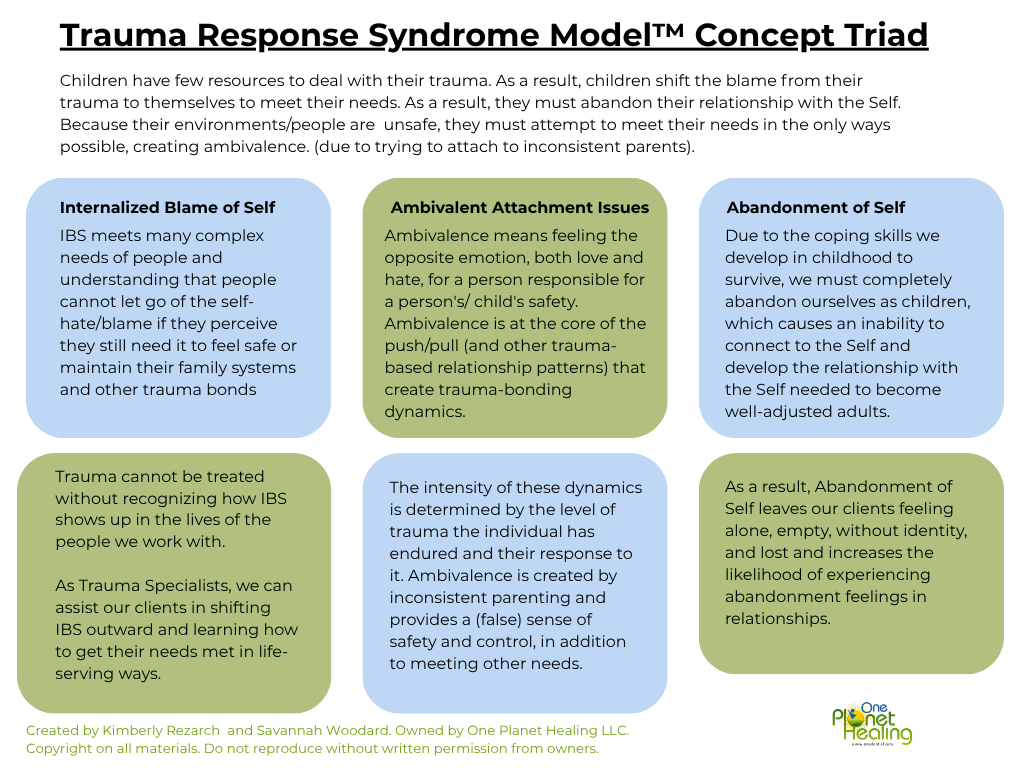
The graphic on this page shows the Trauma Response Syndrome Model™ concept triad, an essential concept for working with people impacted by trauma. Mastering this concept will allow you to work with anyone impacted by trauma. Trauma responses can be complex and extreme, but when trauma is understood, all the ways we learn to cope with our experiences are understandable. Even the most debilitating Trauma Response Syndrome™ can be treated when working from the TRSModel™ perspective.
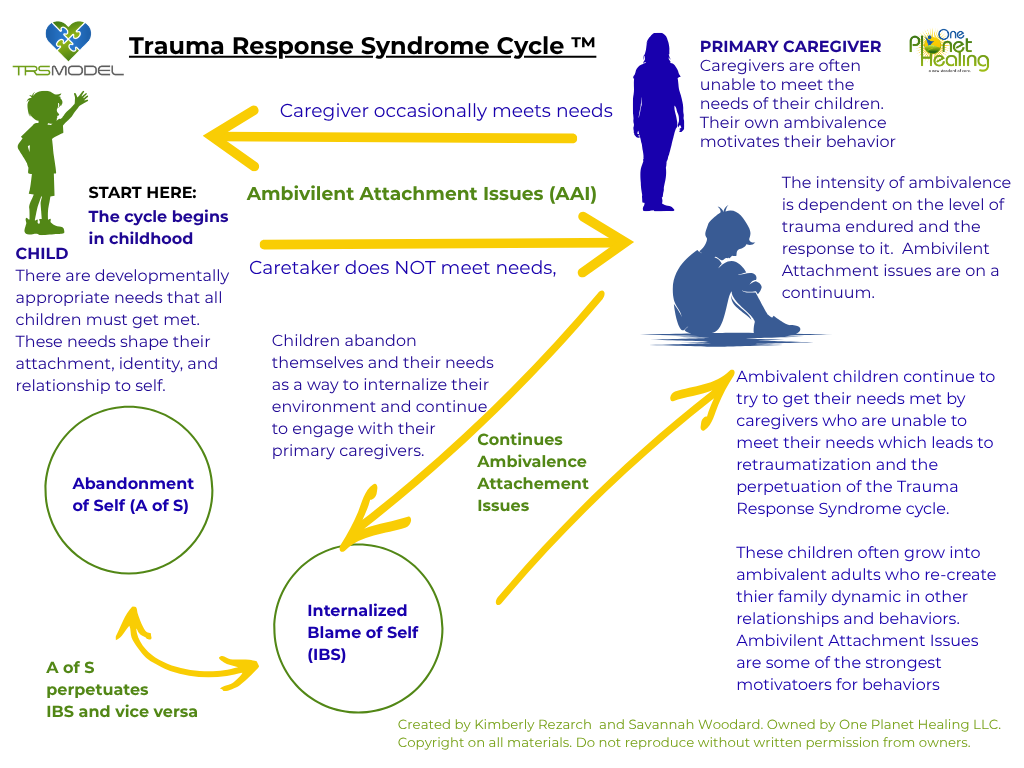
**The TRS Model™ perspective does not increase the stigma of mental illness; rather, it decreases the stigma of trauma. People impacted by trauma are seen as mentally ill rather than as having understandable reactions to our experiences. We are misdiagnosed with disorders we don’t have because people do not understand trauma responses; this must stop. If having a diagnosis feels safest to you as a client or as a helping professional, and you wish to work with people from that perspective, there is no shame in doing that. For those of us who do not feel safe with this current paradigm, there is the Trauma Response Syndrome Model™.**
Resolution of the Trauma Response Syndrome Model Triad™, the three trauma responses described above, is the key to healing from trauma.
Trauma- based needs motivate behavior
The majority of everything survivors do is to avoid trauma and all of the experiences, emotions, and pain related to it. So much focus is put on that the true potential to heal is negated. Therapists, coaches, wellness and helping professionals all (unknowingly) maintain the trauma by also getting caught up in Trauma Response Syndrome, because that is what is presenting as causing distress in the lives of the people they serve. However, the reality is that if we take a step back and ask the questions, “What are you trying to avoid?” “What needs are motivating your behaviors?” “What just happened?” and recognize the core of the behavior isn’t what appears to be causing suffering, we can begin the first step of trauma resolution. In most instances it is to avoid the original pain of their trauma and recognize all of the ways that it manifests.
Many of the primary needs that motivate behaviors overlap and meet more than one need at a time. This is part of the reason that trauma is so complex and multi-layered that it can feel impossible to recover from or treat. However, once the concepts of the TRS Model™ are understood and applied, the resolution becomes clear. The goal of all trauma resolution work is to assist in resolving any early life experience that is motivating behaviors. This means that no matter the trauma-motivated behavior that is presenting as the cause for the Trauma Response Syndrome, the purpose is to (eventually) dive deeper, beyond the behaviors, and get to the root cause. This process can take as long as it takes, often months or years.
Trauma Motivated Outcomes Theory™
Trauma Motivated Outcome Theory (TMOT)™ states that trauma motivates behaviors on a subconscious level, and unmet needs drive these behaviors. TMOT considers motivational drive theories, motivational and social psychology, self-determination theory, and self-regulation theory, and interjects how trauma changes behavior motivation. In addition, insights gained from wisdom keepers from around the globe, alternative perspectives of mental health, and research on psychedelic-assisted therapies, encompass the TMOT and TRSModel™.