
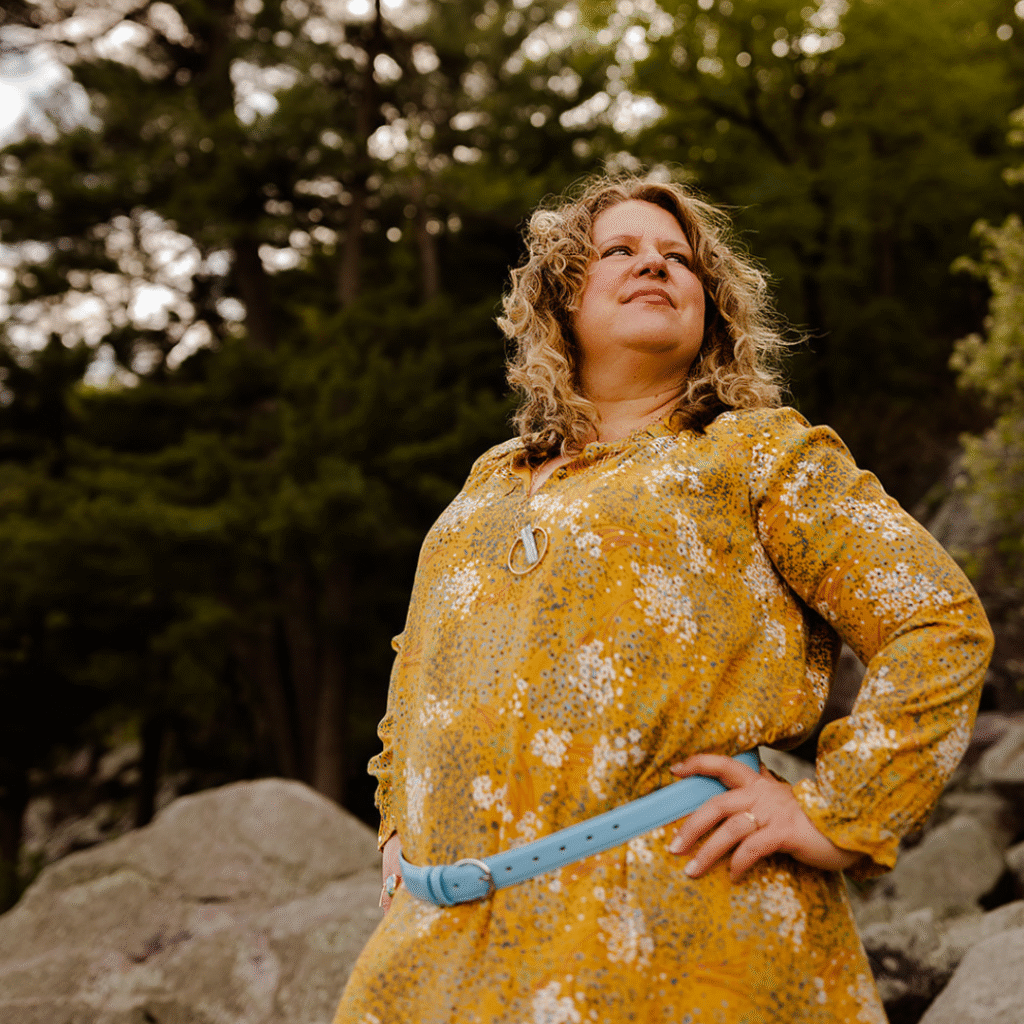
Kim's Story
I experienced the kind of trauma that fragments a child into pieces, creates uncontrollable dissociation, and motivated my behaviors in ways that nearly killed me. However, like many of us, my family was all I knew, and I didn’t realize the extent of my trauma until I began trauma therapy at 33 years old. My childhood trauma was greatly exacerbated by severe trauma in adolescence when I was homeless and sex trafficked and into adulthood. My first suicide attempt was at thirteen years old, which I completely blocked, and again at seventeen, twenty-two, and thirty-three years old. In addition, I experienced chronic suicidal and self-harm thoughts that were nearly debilitating.
I was first hospitalized in an inpatient psychiatric hospital, received my first diagnosis, and was prescribed medications after my first suicide attempt. This experience began my 20 years as a misdiagnosed and wrongly medicated trauma survivor in the mental health system. For the next two decades, I spent my life inpatient in psychiatric hospitals, trying to survive being fragmented and dissociative and acting out of the pain that drove me to nearly destroy myself. I was misdiagnosed with 20 psychiatric diagnoses, prescribed over 30 medications, and took 12 at once. I was drugged into submission.
For me, pregnancy at 18 years was a life changer. I had dropped out of school in 8th grade and ran away from home. I tried to do better only when I had a child to live for. I stopped doing drugs and drinking. I was able to enroll in community college. My ability to intellectually bypass (hyper-focusing on learning to avoid feeling) my trauma allowed me to stay in college, despite falling apart mentally and emotionally. It took numerous years because I would withdraw out of necessity and either be committed or voluntarily go to the psychiatric hospital. Every time I went, I was diagnosed with another disorder, and psychiatrists added more medication to my regimen.
Because I continued to be misdiagnosed, I never received the correct treatment. I continued to re-traumatize myself with my trauma-motivated behaviors. I was so severely dissociative that it interfered with my entire life. I was fragmented, and parts of me were committing crimes, engaging in high-risk sexual behaviors that nearly got me killed, and decompensating daily. However, somehow I was accepted into a master’s program in social work. I would attend a class every day and go out at night drinking and drugging. In 1999 I left school needing to finish one research paper, but I couldn’t handle the pressure. I had a mental breakdown.
During the next four years, I continually tried to work but was so triggered I ended up quitting or getting fired. But, like so many people, I was drawn to working with people who needed help because my trauma was (subconsciously) driving my decisions. I was in a psychiatric hospital when I was approved for Social Security Disability Insurance (SSDI) and stopped trying to be a social worker. I almost gave up. I didn’t leave my house, get out of bed, or shower, and I barely ate. The unprocessed grief from my life weighed heavily on me, which was seen as chronic depression and medicated.
In 2003 I was diagnosed with Dissociative Identity Disorder (DID). The psychiatrist who had known me for a decade became trauma-informed and saved my life. Until that day, I believed I had Bipolar Disorder and was psychotic because I didn’t know anything different. I had lost most of my years to dissociation. Unfortunately, my life became much, much worse before it got better. I spent the next four years in very intense trauma treatment. Everything around me fell apart, and my daughter was removed from my care.
However, I also began to heal. My daughter came home after a year to a different mother. I had spent the year she was gone practicing deep introspection. I made decisions that were against my family system and lost their relationships because I refused to continue to allow the children in my family to be traumatized. The grief of the loss triggered an intense response, and I went to an inpatient trauma unit for 30 days. That was an incredibly eye-opening experience. I witnessed how people were getting their needs met and gained a deeper understanding of trauma-motivated behaviors.
Once I began to recognize my trauma responses and how I was trying to get my needs met, I was able to begin to shift my life. I understood what I was experiencing and started consuming as much information as possible about trauma. To some degree, I was still intellectually bypassing because my therapist wasn’t skilled at holding space for intense emotions. However, she did teach me well, and I began pushing myself to return to work. While still battling severe dissociation, I returned to graduate school and finished. I received my Master’s in Social Work in 2005.
I was almost derailed after my fiancé died by suicide. I could have easily followed him. But instead, I utilized his death as a catalyst and stepped deeper into my power. I made the conscious decision to do something different, to live and to thrive. I did not want to live life in that darkness anymore. It was a strong motivator for change. As a result, I began working as a therapist in different capacities that provided me with knowledge and insights into the impact of trauma, which I’ve incorporated into the advocacy work of One Planet Healing and the foundations of the Trauma Response Syndrome Model, the trauma resolution modality I created.
I spent the next seven years integrating my fragmented aspects of Self and training in every treatment modality. Finally, I believed I could make a difference within the mental health system. I co-founded Embrace Life LLC and began traveling to organizations to train their staff in trauma-informed care. Unfortunately, many organizations were not open to trauma-informed care, and the ones that were still retraumatized their clients.
After numerous traumatic events, I left the mental health system and began developing the Trauma Response Syndrome Model into a more cohesive trauma resolution modality. I could no longer be part of a system that didn’t allow recovery because of how trauma and mental illness were viewed. In addition, I had been deeply betrayed by my trauma therapist and was experiencing dark thoughts again. She allowed an enmeshed and codependent relationship to develop, put herself in my mother’s role, and then completely abandoned me.
In 2012 I made the uneducated decision to discontinue my psychiatric medications under the advice of my psychiatrist. Unfortunately, he was not trained in withdrawals, and the taper was way too fast; I was brain-damaged, in constant pain, and had a psychotic break. I was hospitalized again and unable to care for myself, so I went back on SSDI. It set me back for a couple of years. It was a very traumatic experience on top of a lifetime of trauma.
Over the next decade, I began to build and grow again. I had been knocked down, but like many of us, I got back up again. I lived in a spiritual meditation community with my daughter. Slowly, people began to seek me out to learn about trauma. It started with conversations on my porch, into a home office, into an extensive private practice. I began to teach people about the Trauma Response Syndrome Model concepts, which resonated with people’s experiences. The trauma revolution had begun.
My family’s and my trauma did not end there. We had a long road of repair ahead of us, more tragedy (including the death of my son-in-law), and years of healing intergenerational trauma. Finally, however, we have done the excruciatingly painful inner work to heal our trauma bonds and ensure a securely attached next generation. One of the greatest gifts of my recovery is mending the relationship with my daughter after years of estrangement and building One Planet Healing together.
It has taken what feels like ten lifetimes to get to where I am now. I can honestly say that I have grown into my new trauma-free identity. I no longer live in hypervigilance. I am not in an abusive relationship. I am no longer triggered. I am not afraid of the world. I can connect, trust, and build a community. I no longer need to escape my life through addictions. Most of all, I can truthfully say that my internalized blame has shifted, and I love myself with all my imperfections.
Unfortunately, so many people with my life experience do not make it; they die by their own hands, in institutions, or die figuratively buried beneath diagnoses, symptom management, and polypharmacy. I hope to change this reality.
May the truth set you free.